Why Your Gutters Overflow During Heavy Rain (Even If They Look Clean)
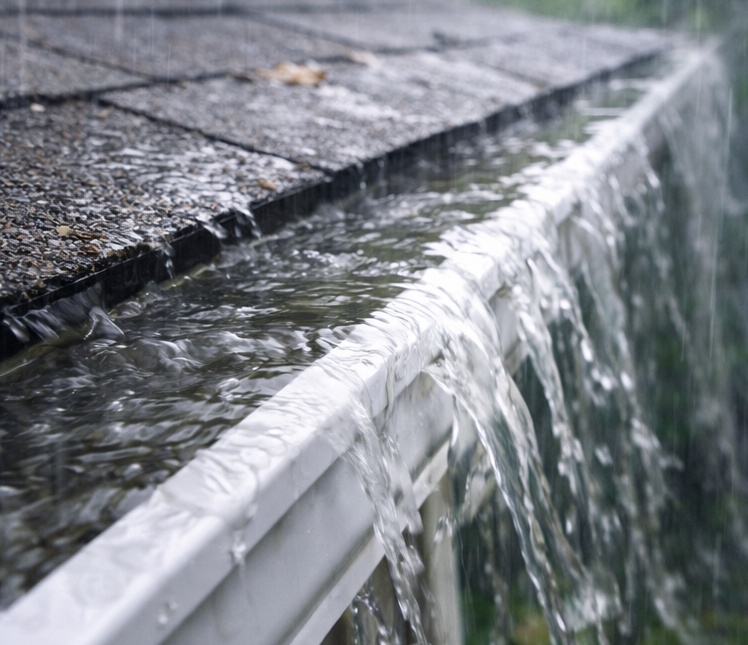
Gutter overflow during heavy rain is one of the most common problems homeowners face. What makes it confusing is that gutters can look clean from the outside. No visible leaves, no obvious blockage, yet water still spills over the edges. The reason usually lies deeper than what you can see.
One of the main causes is hidden blockage inside the system. Debris does not always sit on top. It often collects inside downspouts or forms compact layers along the bottom of the gutter. From above, everything may appear clear, but water flow is already restricted.
Downspouts are the most frequent problem point. Even a partial clog can slow drainage enough that during heavy rain, water simply cannot exit fast enough. As a result, gutters fill up and overflow, even though the top looks clean.
Another common issue is improper gutter slope. Gutters are designed with a slight angle to guide water toward downspouts. Over time, brackets can loosen or shift. This creates flat sections where water pools instead of flowing. During light rain, this may not be noticeable. During heavy rain, it becomes a problem immediately.
Gutter size also matters. In some homes, especially older ones, the installed gutter system may not be designed to handle modern rainfall intensity. Heavy storms can exceed capacity, causing overflow even when everything is technically clean and functional.
Clogging at the outlet is another hidden factor. The connection between the gutter and downspout can collect debris that is not visible from above. This creates a bottleneck effect. Water reaches the opening but cannot pass through efficiently.
Roof debris plays a role as well. Small particles like shingle grit, dust, and organic material wash into the gutter during rain. These materials can create a thin layer of sludge that slows water movement without fully blocking it.
Gutter guards can sometimes contribute to the issue. If they are clogged on top or poorly designed, water may flow over the edge instead of entering the gutter. This creates the appearance of overflow even when the inside is relatively clean.
Another overlooked factor is heavy rain intensity itself. During sudden storms, water volume can temporarily exceed drainage speed. If the system is even slightly restricted, overflow becomes inevitable.
Regular visual checks are not enough to prevent this problem. What matters is full system inspection, including downspouts, outlets, and water flow testing. Proper cleaning should not only remove visible debris but also ensure that water can move freely through the entire system.
Gutter overflow is rarely caused by one obvious blockage. It is usually the result of small hidden issues that only become visible under pressure.